Conditions · Hip, Knee & Foot · Oldham
Lower limb problems that affect how you move
Hip pain, knee problems and foot conditions affect your movement, your posture, and your quality of life. We assess the whole lower limb — because the cause of your knee pain might not be in your knee.
What We Treat
Hip, knee & foot conditions we treat every day
Lower limb conditions are often overlooked or left to manage with painkillers and rest. With the right assessment and treatment, significant improvement is possible for most of the conditions below.
Hip Pain & Osteoarthritis
Including hip OA, bursitis, labral irritation and FAI — conservative management with manual therapy and structured exercise can significantly reduce pain and improve function without surgery.
Knee Pain
Patellofemoral pain, meniscal irritation, knee osteoarthritis and general knee pain — we assess the knee in the context of the whole lower limb rather than treating it in isolation.
Plantar Fasciitis
Heel and arch pain — often worse first thing in the morning — treated with soft tissue work, loading programmes, footwear advice and dry needling where appropriate.
Achilles Problems
Chronic tendinopathy or acute Achilles pain — evidence-based loading programmes combined with manual therapy for lasting recovery and return to activity.
Post-Surgical Rehabilitation
Including hip and knee replacement, ACL reconstruction and other lower limb procedures — phased, progressive rehabilitation to restore strength, movement and confidence.
Postural & Biomechanical Problems
Postural dysfunction contributing to lower limb pain — gait analysis, movement assessment and targeted exercise to address the underlying pattern rather than just the pain.
Our Approach
How we treat hip, knee & foot conditions
Lower limb pain rarely has a single cause. We assess posture, movement, strength and biomechanics — because addressing the contributing factors is what prevents the problem from returning.
Assessment & Diagnosis
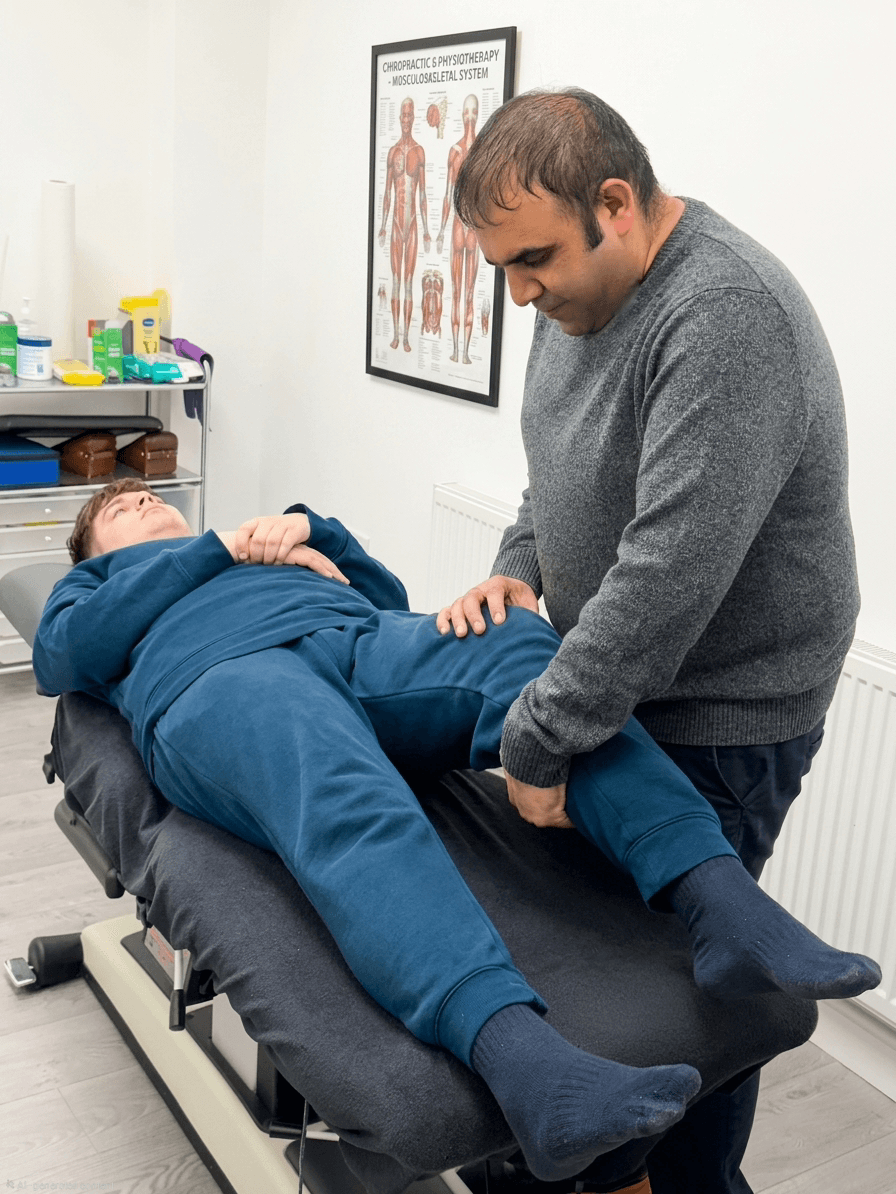
Lower limb pain often starts somewhere other than where it hurts — a knee problem can come from how the hip or the foot is working, and treating only the sore part tends not to hold. So we watch how you stand, walk and move, test the joints above and below the painful one, and check the strength of the muscles controlling them. It takes a little longer at the first appointment, but it's what tells us what's actually driving the problem.
Manual Therapy & Dry Needling
Hands-on treatment is used to settle the painful area and get it moving again — soft tissue work on tight or overloaded muscles, and mobilisation of stiff joints in the hip, knee, ankle or foot. Where a muscle is holding onto a stubborn knot that won't release by hand, dry needling can help it let go. We'd normally combine it with the exercise side rather than relying on it on its own.
Rehabilitation & Strength
Lower limb problems almost always involve something being under-strength or under-prepared for the load going through it, so the strengthening work is usually what makes the change last. We'll build a programme that starts wherever you are now and progresses as you improve — usually fewer exercises than people expect, done properly, rather than a long list done half-heartedly. We'll run through each one with you and adjust them as you get stronger.
Your First Visit
What to expect when you come in
Lower limb conditions need a thorough assessment — we look at the whole kinetic chain, not just the area that hurts.
Full history & consultation
We take a detailed history of your symptoms — when they started, what aggravates or eases them, and how they're affecting your mobility and daily activities. Your appointment is 40 minutes.
Lower limb assessment
We use specialised tests including orthopaedic and neurological tests where appropriate to check everything from your hips to your toes to figure out where the problem is coming from
Clear diagnosis & plan
We explain what we've found, what's causing your symptoms, and what the treatment plan involves — including realistic timelines. If we feel further investigation is needed, we'll advise you clearly.
Treatment begins
Where clinically appropriate, treatment starts in your first appointment. You'll also leave with clear guidance on activity, loading and what to expect as you progress.
New patient consultation from £49 (40 mins) · Follow-up treatments £35 · No hidden costs
View Full Pricing →
Common Questions
Frequently asked about hip, knee & foot treatment
I've been told my knee pain is just wear and tear — can you still help?
Yes, often significantly. Osteoarthritis and age-related degeneration don't automatically mean nothing can be done. Manual therapy, targeted exercise and load management can reduce pain and improve function considerably — even in patients who've been told to "just live with it".
Do I need a referral to start physiotherapy after my operation?
No — you can book directly with us after surgery without a GP or consultant referral. We work with your post-operative guidelines and communicate with your surgical team where needed. Early rehabilitation produces significantly better outcomes than waiting.
My hip pain seems to start in my lower back — which page should I be on?
Good question — and it's a sign you're already thinking about it the right way. Hip and lower back pain often overlap and influence each other. We assess both as part of the same appointment — so don't worry about getting the category right. Book in and we'll work out what's driving it.
Ready to get started?
Book your hip, knee & foot consultation
New patient appointments are 40 minutes. We take a full history, examine you properly, and explain exactly what we find — before any treatment begins.
