Conditions · Sports & Muscle · Oldham
Injuries that keep you from doing what you love
Whether you're a competitive athlete or someone who was just carrying the shopping, muscle and sports injuries deserve proper assessment — not just rest and hope. We get you back to full function.
What We Treat
Sports & muscle injuries we treat every day
From acute muscle tears to stubborn tendon problems that won't go away — we assess the injury properly, identify what's driving it, and treat the cause rather than just managing the pain.
Muscle Strains & Tears
From mild strains to partial muscle tears — we assess the grade of injury, manage the acute phase, and build a structured rehabilitation plan to restore full strength and function.
Ligament Sprains
Including ankle, knee, wrist and shoulder sprains. Proper grading and rehabilitation makes the difference between a full recovery and a recurring problem.
Achilles Tendinopathy
Chronic or acute Achilles pain — one of the most common and most mismanaged injuries. We use evidence-based loading programmes combined with manual therapy for lasting results.
Tennis & Golfer's Elbow
Lateral and medial epicondylalgia — often made worse by repeated rest-and-return cycles. We address the load, the technique, and the tissue with a combination of manual therapy and exercise.
Runner's Knee (ITBS)
Iliotibial band syndrome causing lateral knee pain — very common in runners. We include a biomechanical assessment to identify contributing factors beyond just the painful area.
Shin Splints
Medial tibial stress syndrome — usually load-related. We manage the acute pain, address training errors, and build a graduated return-to-run programme.
Our Approach
How we treat sports & muscle injuries
We don't just treat the painful area — we look at the whole picture. Load, movement patterns, strength deficits, and contributing factors all play a role in why an injury happened and whether it comes back.
Physiotherapy & Manual Therapy
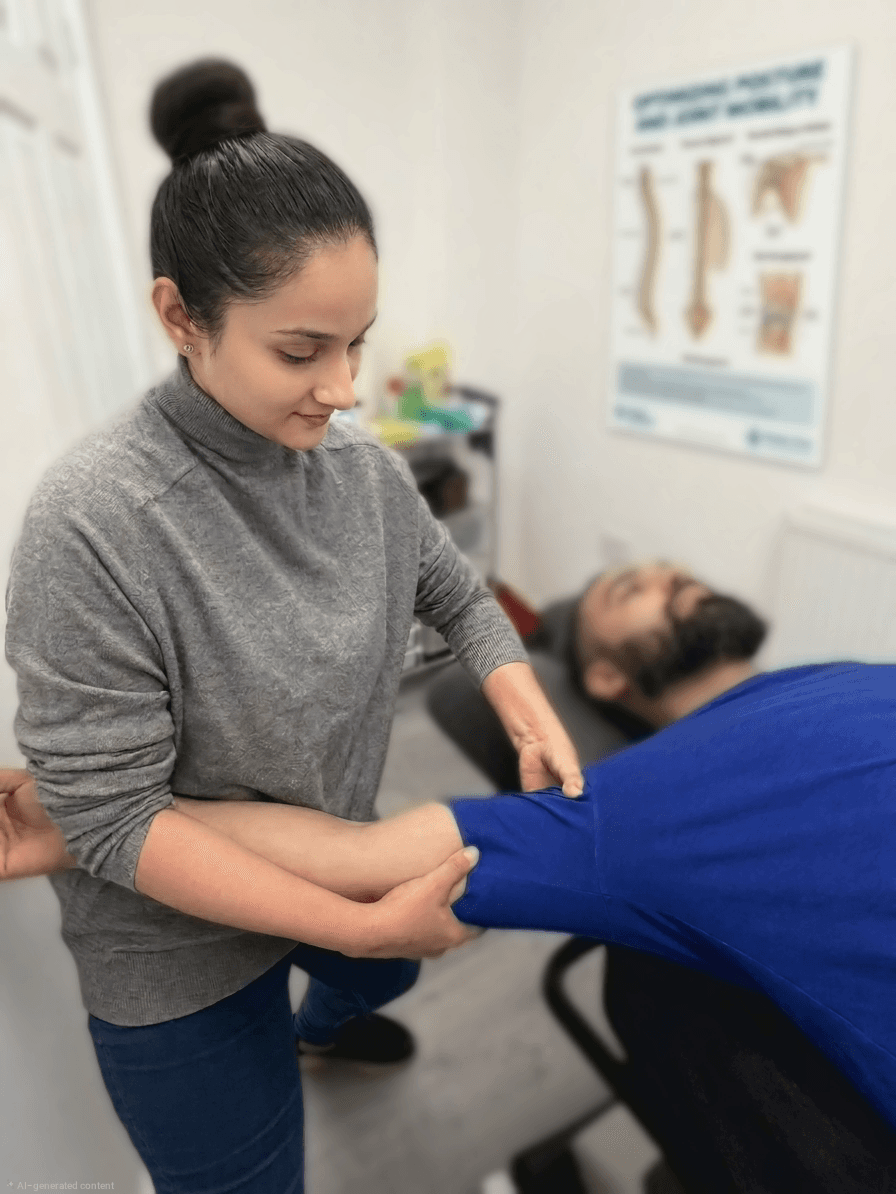
In the early stage after an injury the job is to calm things down and get the area moving safely — hands-on soft tissue work, graded mobilisation, and clear advice on what to do and what to avoid in the first few days. We'll be specific about load, because complete rest usually isn't the answer, but neither is pushing through it. How quickly we progress depends on the severity of injury and how it responds.
Dry Needling
Dry needling uses very fine needles to release tight bands within a muscle — the sort that linger after a strain and stop it working properly. It's quite different from an injection: the needles are about the width of a hair, and most people feel a brief ache as the muscle releases rather than anything sharp. At Innate Healthcare, we use it alongside hands-on treatment and rehabilitation rather than on its own.
Rehabilitation & Return to Sport
Being out of pain and being ready to play again are two different things, and the gap between them is where re-injuries tend to happen. Rehabilitation takes you through that gap in stages — restoring movement first, then strength, then the speed, change of direction or impact your sport actually asks of you. We'll be straight with you about where you are in that process and what still needs to be in place before you go back.
Your First Visit
What to expect when you come in
Whether your injury is brand new or has been niggling for months, we start from scratch — a proper assessment before any treatment.
Full history & consultation
We find out exactly what happened, how it's been behaving since, and what impact it's having on your training or daily life. Your new patient appointment is 40 minutes.
Movement & clinical assessment
We combine the use of special tests such as orthopaedic and neurological tests to determine the root cause of your pain with active tests to test how your body moves whilst performing activities
Clear diagnosis & plan
We explain what the injury is, why it happened, and what the treatment plan looks like — including realistic timelines for recovery. No vague reassurances.
Treatment begins
If treatment is appropriate, it starts in your first appointment. You'll also leave with clear guidance on what to do — and what to avoid — between sessions.
New patient consultation from £49 (40 mins) · Follow-up treatments £35 · No hidden costs
View Full Pricing →
Common Questions
Frequently asked about sports & muscle treatment
Do I need a scan before coming to see you?
No — in most cases a scan isn't needed before your first appointment. We carry out a full clinical assessment and can advise whether imaging would be useful based on what we find. If we feel a scan is warranted, we'll tell you and help you understand the best route to get one.
Will it hurt?
Some treatments — particularly when working on an acutely injured area or using dry needling — can cause temporary discomfort. We always explain what we're doing and why, and we work within your comfort levels. Any soreness after treatment is typically short-lived.
Ready to get started?
Book your sports & muscle consultation
New patient appointments are 40 minutes. We take a full history, examine you properly, and explain exactly what we find — before any treatment begins.
